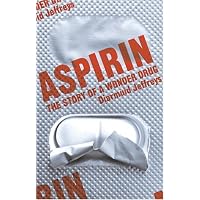
Average Reviews:

(More customer reviews)Are you looking to buy Aspirin? Here is the right place to find the great deals. we can offer discounts of up to 90% on Aspirin. Check out the link below:
>> Click Here to See Compare Prices and Get the Best Offers
Aspirin Review
The engaging writing actually was worth 4 stars, while the medical accuracy was about 1 star. It was fascinating to read about the personal characters of many of the main players with aspirin.For the primary prevention of heart attacks, the author failed to note that most or all of the subjects were men in the various trials. Based on later work available to Mr. Jeffreys, this omission was serious, since MDs and others recommended aspirin for women as though they had been tested from the beginning.
The Physicians Health Study (PHS) of 7 years duration that generated all the rave headlines (p262) in 1989 did cut mostly non-fatal heart attack risk to 0.31 of placebo. Mr. Jeffreys failed to mention that the all-cause death risk was 0.96 and not statistically significant. Further, he neglected to mention that the PHS did not use aspirin, but used Bufferin™. This is not a trivial difference because of the beneficial magnesium content of Bufferin™. The later UK trial of plain aspirin on 5,500 male physicians for 7 years told a different story. The risk of non-fatal heart attack was a less impressive 0.68, and the mortality risk was 1.06. A later trial of 3.1 years that included separate results for women taking daily aspirin of unknown form gave them a mortality risk of 1.12.
Mr. Jeffreys fell for the ruse of relative risk (RR) rather than absolute risk (AR); Big Pharma uses RR to generate bigger numbers. For the 22,000 men in the PHS the reduction of AR per year of a first heart attack was just 0.11%, not a big deal. Aspirin for primary prevention is not worth the risk.
For secondary prevention of heart attacks (ones other than the first), Mr. Jeffreys correctly presented the fact that the RR with aspirin was down to 0.75-0.80; but he failed to note that just 5 weeks of daily aspirin provided nearly all of the "benefit"; so it was never necessary to continue aspirin forever and suffer all the side-effects mentioned but minimized by Mr. Jeffreys. Aspirin is probably worth the risk for short-term use in secondary prevention. He did note that women were under-represented in these early trials, but did not come to the obvious conclusion that women should avoid aspirin. He failed to note that long-term use of aspirin was associated with cataracts. He failed to compare the minor effects of aspirin with those of valuable supplements, such as EPA/DHA from fish oil, magnesium, and even vitamin E.
In enthusing about aspirin as an anticancer drug, Mr. Jeffreys failed to note that the increased mortality rates noted above, which include cancer deaths, make it unlikely that aspirin will ever be a serious threat to cancer.
Mr. Jeffreys repeated the nonsense that fatty foods cause atherosclerosis leading to heart attacks (p235, 267), and presented the challenge to this dogma in a footnote that mentioned Uffe Ravnskov as a "lone wolf" dissenter. This is a propagandist trick as there have been many, many dissenters over the years to what is called the "diet-heart" theory. See www.THINCS.org. (What is true is that polyunsaturated fats or oils, especially ones made from the omega-6 linoleic acid and trans fatty acids from partial hydrogenation do cause both diabetes and atherosclerosis, not animal or tropical fats.)
*****
Minor problems were confusing heart attacks (myocardial infarctions) caused by broken pieces of plaque or congealed blood platelets (thrombi) with congestive heart failure, and by ignoring sudden cardiac death brought on by arrhythmias.
Beta-blocker drugs do not steady the heartbeat (p246) as antiarrythmics were supposed to do, but slow the heartbeat.
Salicylates are not alkaloids (p11).
Aniline is not isolated from coal tar (p42).
Acid anhydrides are not usually obtained when acids are separated from water (p46).
Aspirin is not metabolized by loss of the hydroxyl group (p47).
A paradox? "Aspirin didn't cure a single case of influenza, but it helped millions of people in their battle with the virus and undoubtedly saved many lives as a result." (p124)
Reverse snobbery? Some chemical names of 25 letters or fewer were fussed over. Would Mr. Jeffreys have done the same for the 28-letter name Abercrombie Featherstonehaugh? (p207, 214ff)
Aspirin was buffered in an attempt to ease stomach distress, not to speed up absorption (p210).
The great superiority of magnesium to aspirin in pre-eclampsia was ignored (p266).
The "polypill" containing aspirin, beta-blocker and statin drugs was presented as a great idea (p273). Those who understand more than Mr. Jeffreys have written that it is ridiculous. See www.THINCS.org.
[...]
Aspirin Overview
Want to learn more information about Aspirin?
>> Click Here to See All Customer Reviews & Ratings Now

0 comments:
Post a Comment