Average Reviews:

(More customer reviews)Are you looking to buy Coronary Stenting (Oxford American Pocket Notes)? Here is the right place to find the great deals. we can offer discounts of up to 90% on Coronary Stenting (Oxford American Pocket Notes). Check out the link below:
>> Click Here to See Compare Prices and Get the Best Offers
Coronary Stenting (Oxford American Pocket Notes) Review
There are numerous discussions on the Internet addressing severe Post Operative Stent Pain. I purchased this book in hopes of finding out more about it from an authoritative source. This book falls short and does not deal with the aforementioned. Additionally this widely experienced concern seems to be omitted in preoperative, hospital Informed Consent Forms?Excruciating, knife like pain can occur for months or even more than a year after Coronary Stent Surgery. This pain can be felt under the left shoulder blade and in the chest. It takes my breath away. Shallow breathing helps to alleviate it as a deep breath makes it worse. Mine does not occur when I am exercising. In fact, I have to get up and walk to alleviate it. The post procedure stent pain I endure severely interferes with my sleep.
After stent procedure pain experiences are noted throughout the Internet. However, they are not addressed in this book. I do not think patients are adequately informed of this severe negative side affect prior to having this procedure? I did not have a heart attack prior to having this procedure, and am now almost incapacitated due to sleep deprivation.
Over 20 years ago, a family member had Chelation Therapy after Balloon Angioplasty. This person embraced a low fat diet and does not take drugs. His cholesterol level is currently just above 200. I sure wish I'd insisted upon Balloon Angioplasty and followed it up with Chelation Therapy. Or just left the hospital and opted for Chelation Therapy alone. I will never get another stent under any conditions. All of the doctors and medical staff coerced me. A parade of cardiologists came into my room at over $250 a pop and really pushed the drug eluding stent. One cardiologist did not do this but encouraged me to embrace the DASH diet which I had been on since prior to it becoming a diet. I'd been raised on a low sodium diet because of a family member's congestive heart failure and pretty much stopped eating red meat and high cholesterol foods in college during the 70s. So, the DASH diet concept was already in place as was the daily exercise. (I have a gene related high cholesterol condition I'm sooo glad I at least had the conviction not to follow their advice and get the drug eluding type. To its credit, this book does present the negative outcomes of the first generation drug eluding stents (DES). As I understand it, there are several lawsuits dealing with them now.
This book did include potential hazards of the procedure to include: bleeding which can lead to death; contrast induced kidney disease (contrast is the injectable dye that enables the physicians to see the problem in the heart artery); contrast allergy and or anaphylaxic shock (which can lead to death); catheter contact with myocardium induced abnormal atrial/ventricular arrhythmias; injury to coronary artery (as in puncturing it); loosening coronary plaque from catheter wire manipulation causing an embolism and stoke if it lodges in the brain; and retnosis or reclogging of the artery over time.
Other potential, pertinent, negative aspects of stenting that I've read about elsewhere include:
1. Damage to the cells on the walls of the artery (epithelium)from the pressure of the stent. My doc was proud of the fact that my vessel was very flexible so he extended it as much as possible in case I needed another stent to be laid in over top the first. I would never have approved of this as it seems like a set-up for another procedure. If I had known this was standard procedure, I would have refused this treatment.
2. Damage to the epithelium or underlying cells which creates an unsmooth surface which catches sticky cholesterol. Such damage enhances the possibility of retinosis or replaqueing of the arterial walls at the stent site.
3. Widening of the stented area causing decreased blood flow and further increasing plaque deposits in that area
4. Potential allergic reaction to the stent material (Testing for allergies doesn't seem to be regular part of the program)
5. Puncture or pressure to or on the heart causing pain. (I fear the later is my problem due to the extensive expansion of the stent and my stabbing pain exacerbated by sleeping on my side.)
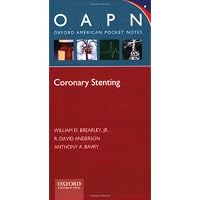
This book has a good Table of Contents, but it lacks an Index and Glossary both of which are needed. It is a small book that can easily fit in a pocket or purse. It provides clear information on what angina is and types of angina as well as the stent procedure and types of stents. I would not have bothered to purchase this book if I knew or could see exactly what was in it as I had read most of the information from other sources.
From what I've seen and heard from friends and family, and realized in hind-sight, Chelation Therapy would have been superior to the stent procedure for me. My oxygen levels where in the high 80's to high 90% range prior to the procedure, and I did not have any sharp pains that I now deal with on a regular bases while at rest. I now realize, I had the time to do the Chelation. I was lead to believe by the docs in the hospital that I had to have the procedure right away. Now, I believe I'm going to die an early, perhaps lengthy, painful death because I took the stent option sales pitch instead of plain balloon angioplasty and Chelation Therapy. Bad decision.....
Books I did find helpful to my condition by helping me to lower my cholesterol through diet include The China Study and Forks Over Knives. From these books, my food style has progressed from that of mostly Vegetarian to mostly Vegan. I also found Linus Pauling's treatment for LDL LP(a) helpful. A book containing this and other relevant information is: Practicing Medicine Without A License? The Story of the Linus Pauling Therapy for Heart Disease. Another excellent book is Forty Something Forever: A Consumer's Guide to Chelation Therapy and other Heart-Savers. As far as exercise goes, I walk or ride a bike daily. For stress management, I use the computer biofeedback computer game, The Journey to the Wild Divine with the heart coherence program.
From what I've read, balloon angioplasty and stenting may be necessary in some cases, but in my case I must deal with the underlying cause of the problem, not just the symptom. This is more then a conviction. It is a part of my religion. I am going to extreme measures to try to repair the damage I allowed to be done to me by traditional, one size fits all, allopathic medical intervention. In the future, I WILL NOT be coerced.
Coronary Stenting (Oxford American Pocket Notes) Overview
In the last twenty-five years, coronary stenting stands as the cornerstone of modern day interventional cardiology. Today many choices exist for interventionalists with the most basic delineation being bare metal stents (BMS) and drug eluting stents (DES).Within each broad category there are multiple stent delivery systems, sizes, structural differences, various metal compositions, and anti-proliferative agents for drug eluting.There are several controversies currently surrounding coronary stents.Despite the fact that DES has been proven to decrease vessel restenosis when compared to bare metal stents, the first generation of DES increased the occurrence of late stent thrombosis, which was uncommon with bare metal stents.Additionally, stents have been used for multiple types of lesions with a significant number of these being considered off label indications.Lastly, the duration of dual anti-platelet therapy with aspirin and clopidogrel following stent implantation, especially DES, needs to be further examined by the medical community. Despite current topics of debate in stenting, much promise exists in coronary intervention with bio-absorbable stents and anti-proliferative balloons currently in development.An understanding of the various principles of coronary stenting factors, including patient appropriateness, potential complications, and peri-operative management, is necessary for any healthcare provider currently treating cardiac patients. Perhaps most importantly, a firm understanding of the importance of dual anti-platelet therapy can have a significant impact on the prevention of stent complications, especially stent thrombosis, which is often associated with significant mortality.This guide will serve as a reference for those healthcare providers who evaluate potential coronary stenting patients, as well as to help them properly manage those who are already stent recipients.Using the ultra-concise, portable format of the Oxford American Pocket Note series, this volume will prove to be a practical guide for interventionalists seeking a quick reference in coronary stenting.Want to learn more information about Coronary Stenting (Oxford American Pocket Notes)?
>> Click Here to See All Customer Reviews & Ratings Now

0 comments:
Post a Comment