Average Reviews:

(More customer reviews)Are you looking to buy Why We Hurt: The Natural History of Pain? Here is the right place to find the great deals. we can offer discounts of up to 90% on Why We Hurt: The Natural History of Pain. Check out the link below:
>> Click Here to See Compare Prices and Get the Best Offers
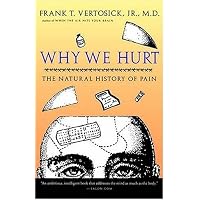
Why We Hurt: The Natural History of Pain Review
Dr. Vertosick has written a fine collection of vignettes of patients suffering from chronic pain, from his perspective as a practicing neurosurgeon. Detracting from his storytelling skills, however, are the errors of fact and intepretation which appear throughout the book.Most egregious is the confusion of nitrous oxide for nitric oxide, the molecule used ubiquitously in our bodies for vascular regulation and neurotransmission. This is not simply a spelling error, since Dr. Vertosick goes ahead and mistakenly identifies the subject of the 1998 Nobel prize (nitric oxide) as "laughing gas" (nitrous oxide). Despite the similarity in nomenclature, the two gases are completely different in their physiological roles and effects.
Perhaps in an effort to justify the grandiose title, many appeals to evolutionary theory are made. These efforts are stretches at best, and wrong at times. For example, the speculation that the malaise produced by the flu may be adaptive to humans by limiting viral spread through social contact ignores the fact that the individual, not the group, is the most important locus of Darwinian selection. A more likely adaptive explanation for the clinical symptoms of the flu is that inactivity and fever allow the infected body to concentrate its physiological resources against the invaders.
In a discussion on how nitroglycerin relieves the crushing chest pain (and myocardial ischemia) of angina, the explanation was given that the body's arteries dilate, thus making it easier for the suffering heart to pump blood forward. In fact. the major effect of nitroglycerin is to dilate the veins, providing the heart with lesser volumes of blood to pump.
While lauding the pain relief given to his laboring wife by epidural analgesia, Dr. Vertosick reports that the epidural prolonged the birth process. Although there is a correlation between the use of an epidural and longer labor, the current medical literature attributes this to the likelihood that women with complicated- and longer - labor are more likely to request an epidural, not that an epidural prolongs the childebirth process.
Finally, and this probably falls in the "nitpicking" category, the bacterium causing leprosy belongs to the same genus as that causing tuberculosis, not the same species as claimed in the book.
I did not read the book with an intention to find errors, but there are mistakes which jump out at the biomedically literate reader. I would still recommend the book as a good introduction to the problem of chronic pain, written with sympathy and clinical insights. However, it is disturbing that a book written by a physician would contain so many factual errors of a biological or medical nature. I wish the author - or his editors - would clean up the text for a second edition.
Why We Hurt: The Natural History of Pain Overview
Want to learn more information about Why We Hurt: The Natural History of Pain?
>> Click Here to See All Customer Reviews & Ratings Now

0 comments:
Post a Comment